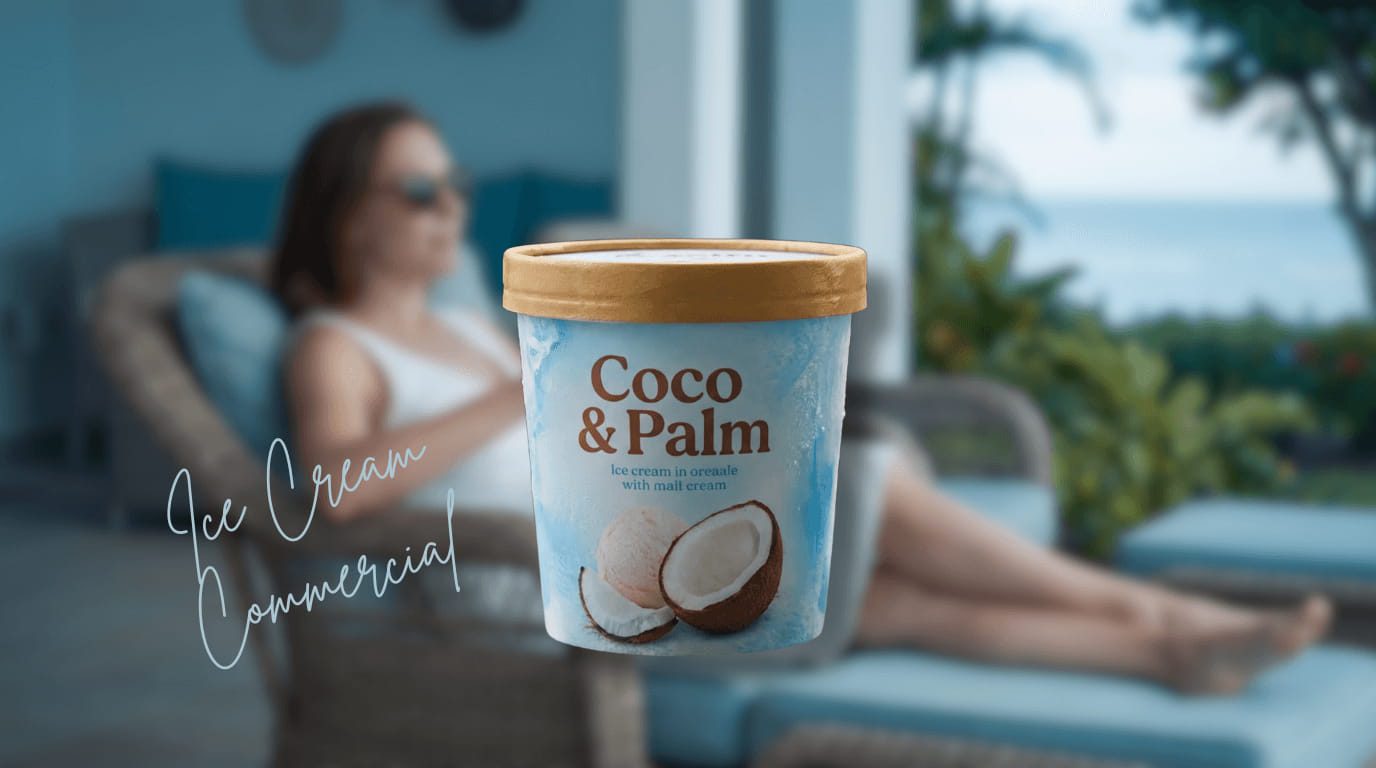
AI generated commercials are becoming common, but many still feel visually loud and emotionally empty.
For this project, the focus was not on showing what AI can do, but on using AI to tell a simple, cinematic story with restraint.
This article breaks down How I Created a Cinematic Ice Cream Commercial Using AI, step by step from concept to final output including:
- story decisions
- shot planning
- image to motion prompting
- performance direction
- music and voice choice
The goal is to show how cinematic thinking can shape AI generated videos, even at a short commercial length.
Why Story Matters in AI Commercials
Strong visuals alone don’t make a cinematic ad.
What makes a commercial feel premium is clarity of contrast and intention.
For this film, everything revolved around one idea:
Heat versus Cool.
Instead of explaining this with dialogue or text, the contrast was built visually and emotionally through pacing, performance, and camera behavior.
AI tools were used only after the story logic was clear.
Core Concept: Heat vs Control
The entire commercial is structured around two opposing states:
- Physical effort under intense heat
- Calm presence in the shade
The male character represents:
- movement
- strain
- rising temperature
The female character represents:
- stillness
- ease
- control
The ice cream acts as the bridge between these two worlds.
It is not treated as a prop, but as the emotional center of the frame.
Planning the Film Before Using AI
Before generating any motion, the commercial was mapped like a traditional film.
The structure was intentionally simple:
- Opening: establish heat and effort
- Middle: introduce contrast
- End: settle into calm and control
The runtime was limited to around 30-40 seconds, which meant every shot had to justify its presence.
No extra angles.
No repeated emotions.
No unnecessary spectacle.
Designing Shots With Intent
Each shot was designed around a single feeling.
Examples:
- Close ups were used to feel temperature and effort
- Wider frames were avoided to keep the experience intimate
- Calm moments were framed with stillness
This helped avoid a common AI issue: visual overload without emotional clarity.
Only one indulgent moment was allowed in the entire film everything else stayed grounded in real time motion.
Using Kling AI for Image to Motion
Kling AI was used to animate still images into video.
Instead of writing generic prompts, motion prompts were treated like direction notes.
Each prompt focused on:
- camera behavior
- facial restraint
- natural pacing
- realism
The goal was not to “animate everything” but to animate only what mattered.
Example Shot: Establishing Heat
Purpose:
Make the viewer feel physical effort without showing full action.
Base Image: A close up of the man working under sunlight.

Motion Direction:
- implied hammer movement
- visible sweat movement
- subtle handheld instability
Why It Works:
The viewer understands heat and effort through texture, not explanation.
Example Shot: Ice Cream Lid Opening
Purpose:
Introduce temperature contrast.
Base Image: Hands holding the ice cream tub.

Motion Direction:
- slow, controlled lid lift
- subtle cold vapor
- locked camera
Why It Works:
The calm motion immediately shifts the emotional temperature of the film.
Directing Performance in AI Characters
One of the biggest challenges in AI generated video is overexpression.
To avoid that:
- facial movements were kept minimal
- smiles were restrained
- eye contact was carefully timed
Instead of acting, characters were guided to react naturally.
A glance held slightly longer.
A smile that appears briefly and fades.
A head movement that stays understated.
These small choices help AI characters feel believable.
Camera Movement as Story Language
Camera movement was used sparingly and intentionally.
- Subtle handheld motion suggested effort and heat
- Still frames suggested calm and control
There were no dramatic push ins, zooms, or exaggerated moves.
Music and Atmosphere
The commercial uses a single background track throughout.
The music was chosen for:
- low tempo
- minimal structure
- soft female vocal texture
There are no lyrics and hooks.
The vocal functions as atmosphere rather than performance.
Voiceover: Saying Less on Purpose
The final packshot includes a voiceover generated using ElevenLabs.
Only brand name is spoken:
“Coco & Palm”
There is no tagline and no explanation.
The delivery is soft, controlled, and brief followed by silence.
This choice keeps the ending confident and understated.
Final Result and Learnings
The final commercial feels calm, intentional, and cinematic despite being created with AI tools.
Key takeaways from this project:
- Story comes before prompts
- Restraint creates premium feel
- Subtle performance beats exaggeration
- AI works best when directed, not unleashed
For this particular commercial, restraint and contrast shaped the final tone. The choices were guided by the idea itself rather than a fixed style or formula.
Different stories call for different energies. In this case, stillness and control felt more honest than noise or spectacle.
If you’re interested in how structured thinking can also be applied at the prompting level, this guide on few-shot prompting explores how examples and patterns help AI produce more controlled and reliable outputs.